Paperclip Link Diamond Drop Pearl Earrings
$3,000.00
- 14k solid gold
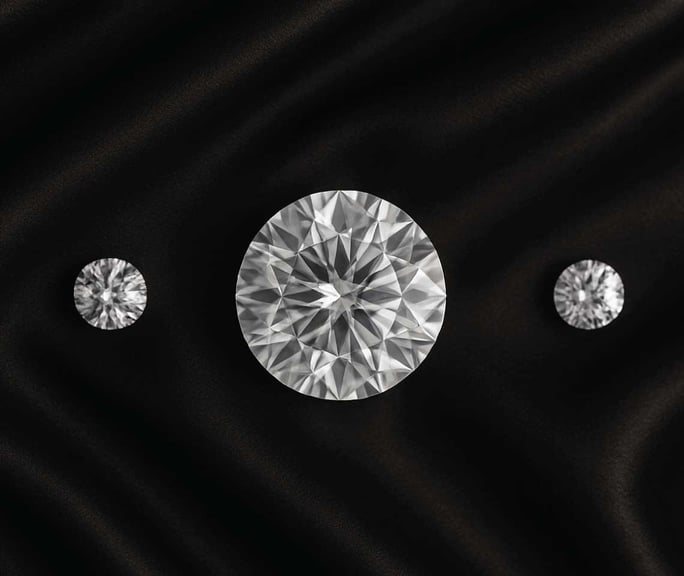
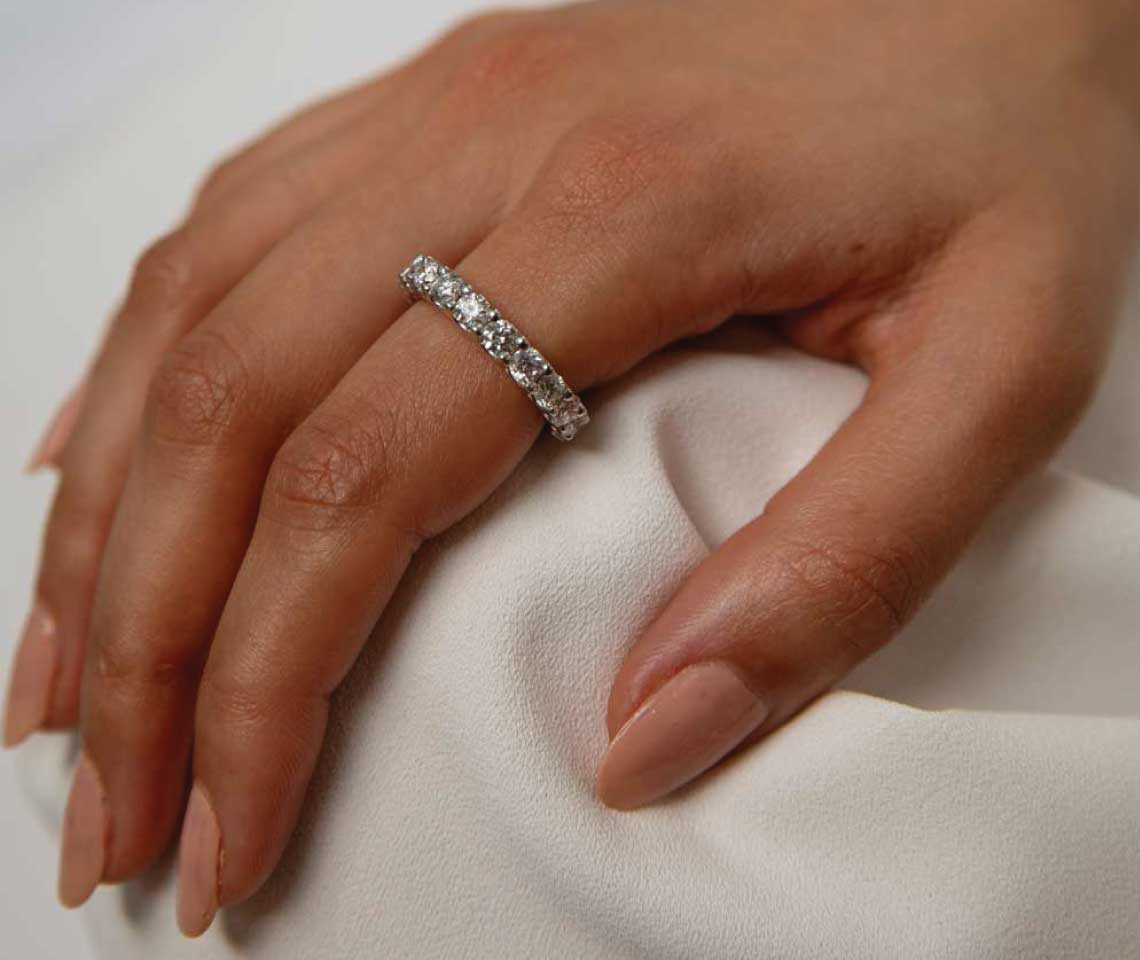
- 52 round brilliant diamonds
- Natural diamonds
- Total carat weight: 0.32
- Color/ clarity: GHSI1
- Natural diamonds
- Length: 3.75 inches
- Width: 6mm
- Fish hook backs
- Sold as a pair
Paperclip-inspired gold link earrings with interlocking links — one link set with pavé-set diamonds while the remaining links finished w. high-polished gold — creates the ultimate cool-girl drop earring.
Baroque pearls exhibit irregular shapes and sizes, with dented and uneven surfaces. The imperfections aren’t seen as flaws. Rather, they are celebrated for their uniqueness.
No two baroque pearls will be exactly alike, and every piece of jewelry that utilizes baroque
pearls showcases something different.
Details of the piece
Diamonds
52 round natural diamonds (.16 carats per pair)
SI1 Clarity
Pearls
Freshwater baroque pearl
Material
14K solid gold
In the same style
The Diamond Guide
Carat
Carat represents the weight of a diamond, not its actual size. While larger diamonds often carry higher prices, two diamonds with the same carat can differ in value depending on their cut, color, and clarity. Carat plays an important role in a diamond’s overall appearance, but it’s not the only factor that determines beauty or brilliance.
A carat is a unit of weight equal to 0.2 grams and is divided into 100 points. Accurate measurement is essential to know a diamond’s true weight and determine its value.
Yes, carat affects how big a diamond looks and its price. However, a smaller diamond with an excellent cut can appear more brilliant than a heavier diamond with a poor cut.
Yes. Even if two diamonds weigh the same, differences in cut, color, and clarity can make one more valuable than the other.
Diamonds are weighed using precise scales that measure in points (1/100 of a carat) to ensure accuracy for proper valuation.
Color
Diamond color describes the natural tint present in a diamond. Diamonds that are closer to being colorless are generally more brilliant and valuable. While most diamonds range from nearly colorless to slight yellow or brown, rare fancy-colored diamonds, like pink, blue, or green, are highly prized for their uniqueness.
Yes, diamonds with less color are usually more expensive. Rare fancy-colored diamonds can also have high value due to their uniqueness.
No, some diamonds naturally have colors like pink, blue, or yellow, called fancy-colored diamonds, which are rare and valuable.
Professional labs grade diamonds from D (completely colourless) to Z (noticeable yellow or brown). The closer to D, the rarer and more valuable the diamond.
Clarity
Diamond clarity measures how clean a diamond is. Every diamond has tiny marks—some inside, called inclusions, and some on the surface, called blemishes. Fewer marks make a diamond look brighter, sparkling, and valuable. Many of these flaws are so small that you can’t see them without magnification, but they still affect the stone’s beauty and price.
It shows how free a diamond is from internal and surface imperfections that can affect its shine and overall appearance.
The highest clarity is Flawless, meaning no visible imperfections even under 10x magnification.
Diamonds are usually graded as Flawless (F), Internally Flawless (IF), Very Very Slightly Included (VVS), Very Slightly Included (VS), Slightly Included (SI), and Included (I).
Cut
The cut of a diamond is what makes it truly shine. It’s about the shape alone, it’s about how the diamond is carefully shaped, angled, and polished to reflect light. At Leezanding, we ensure every diamond is cut with precision so it sparkles at its best.
A full cut diamond usually has 57 or 58 tiny flat surfaces called facets. They help the diamond reflect light and look super bright.
The cut that really makes a diamond shine is the Ideal or Excellence cut. It's all about how the stone is shaped so it catches the light and sparkles the most.
People often confuse "cut" with "shape". Shapes are round, princess, pear, or oval, but the cut is about how well the diamond is made, angles, proportions, and polish that make it sparkle.
Yes! Even a big diamond can look dull if it's cut poorly. A good cut makes it shine.
Standard
GIA LAB CLASSIFICATION
GIA, the Gemological institute of America, recently introduced two distinct grading classifications for lab-grown diamonds to ensure clarity and transparency: Premium and Standard .
The standard grade includes diamonds that offer outstanding quality within a slightly boarder range. These diamonds are graded E to J in color, with VS clarity, and Very Good Polish and symmetry. For round brilliant cuts, a Very Good cut grade is applied, balancing beauty and value.
Premium
GIA LAB CLASSIFICATION
GIA, the Gemological Institute of America, recently introduced two distinct grading classifications for lab-grown diamonds to ensure clarity and transparency: Premium and Standard. The Premium grade represents GIA’s highest standard in diamond evaluation. It is reserved for diamonds that exhibit exceptional quality — featuring D color, VVS or higher clarity, and Excellent polish and symmetry. In the case of round brilliant diamonds, the cut grade must also be Excellent, ensuring top brilliance and perfection.In the same style
Frequently Asked Questions
You can return your order within 10 days of receiving it, but only for U.S. orders. To qualify, items must be brand new, unworn, and have all tags still attached.
We’ll provide a FedEx return label—just drop your package at a FedEx location within 7 days. Once we get your return, we’ll check the item and process your refund within about 10 business days.
Most orders are processed and shipped within 7–10 business days. Some items, such as made-to-order products or out-of-stock items, may take a little longer. We always keep you informed about any delays so you know exactly when to expect your order.
Once your order ships, you’ll receive an order ID via email. You can use this number to track your package in real time from our website.